40 allergens required on food labels
Allergens: Where Food Safety and Labeling Intersect The simple answer is that they mandate that food labels clearly disclose the presence of allergens, so that allergic consumers can avoid the foods that can kill them. The viability of this solution depends on strict compliance by the food industry with the requirement of label disclosure. Food allergy labelling Standard 1.2.3 requires the most common food allergens to be declared on food labels. Where labels are not required (for example, food served in restaurants etc) this information must be provided to the consumer on request, either verbally or in writing.
FDA: Food Labels Must List Allergens - WebMD Manufacturers are required to identify in plain English the presence of ingredients that contain protein derived from the following: Milk Eggs Fish Crustacean shellfish (like shrimp) Tree nuts...
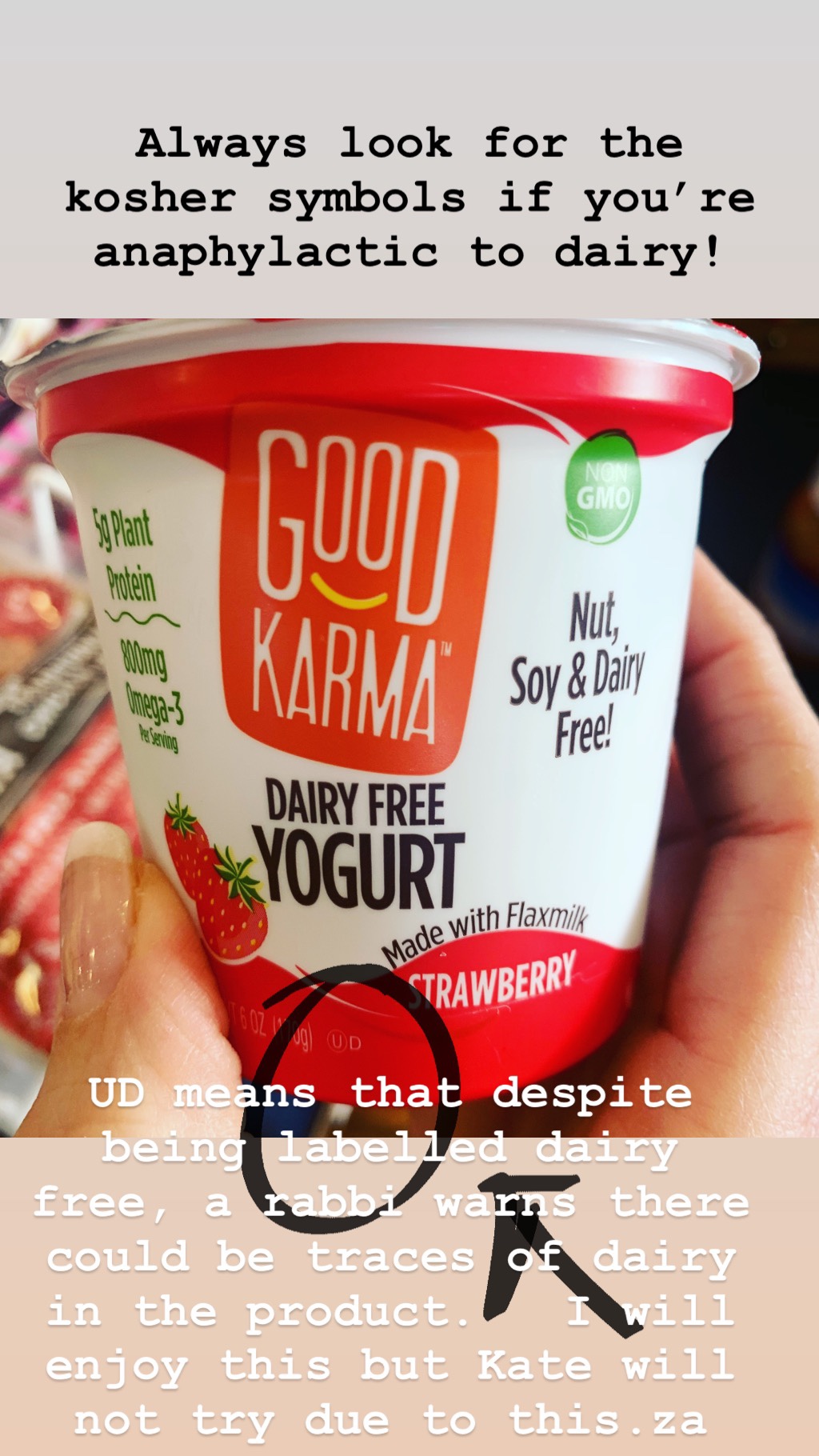
Allergens required on food labels
Requirements - List of ingredients and allergens on food labels - Food ... Food allergens, gluten and added sulphites do not have to be declared when present in prepackaged products that are exempt from bearing a list of ingredients under B.01.008(2)(a)-(e) of the FDR (for example, items 1 to 5 in the list above), unless a list of ingredients is voluntarily shown on the product's label [B.01.010.1(4), B.01.010.2(4), FDR]. Food Labeling | Food Allergy Research & Education Food labels need to be accurate and truthful to help people with food allergies stay safe. Issues can arise when companies change the way they manufacture a food—or when they occasionally make mistakes. As of 2016, the U.S. Food and Drug Administration (FDA) has the authority to initiate allergen-related recalls. Understanding the FDA Food Allergen Labeling Requirements Are We Required to List Allergens on Our Food Labels? Yes, manufacturers need to declare the presence of allergens in their product if it has any. It is required by law under the Food Allergen Labeling and Consumer Protection Act, which is simply known as "FALCPA." Food allergies occur when some types of food trigger an immune reaction.
Allergens required on food labels. PDF Allergen Labeling on Food Products Allergen declaration is required on products regulated by the Food and Drug Administration (FDA), U.S. Department of Agriculture (USDA), and state regulatory authorities (e.g., Mississippi Department of Agriculture and Commerce, Mississippi State Department of Health, Mississippi Department of Marine Resources). PDF Food Allergen Labelling and Information Requirements FSA Food Allergen Labelling and Information Requirements: Technical Guidance - June 2020 . 9 . on food businesses to label PPDS food with a list of ingredients containing emphasised allergens bringing the provision of allergen information in line with labelling for prepacked food, reducing consumer confusion. 18. Food Allergies | FDA Major Food Allergens Congress passed the Food Allergen Labeling and Consumer Protection Act of 2004 (FALCPA). This law identified eight foods as major food allergens: milk, eggs, fish, shellfish,... Allergen declarations, warnings, and advisory statements on food labels ... In February 2021, the Australia New Zealand Food Standards Code (the Code) was amended to introduce new requirements for the labelling of allergens in food. These plain English allergen labelling changes will help people find allergen information on food labels more quickly and easily so they can make informed and safe food choices.
Allergen labelling - Food Standards Some foods and food ingredients or their components can cause severe allergic reactions including anaphylaxis, which is why declaring allergens is important. These are the most common foods that can cause allergic reactions in Australia and New Zealand: peanuts tree nuts milk eggs sesame seeds fish shellfish soy lupin wheat. Food Allergy & Anaphylaxis | Food Labeling | Food Labels Only crustacean shellfish (e.g. crabs, shrimp, lobster, or crayfish) and not mollusks (eg. clams, mussels, scallops, or squid) are required to be labeled on packaged goods. The labeling law applies only to foods regulated by the FDA. Allergen Labeling Requirements — FDA Reader Packaged foods for sale in the US which were labeled after January 1st, 2006 must have an allergen statement. This includes single-ingredient packaged foods (i.e. canned tuna) Fresh fruits and vegetables do not require an allergen statement. List of ingredients and allergens on food labels - Food label ... Food allergen source, gluten source and added sulphites statement, means a statement appearing on the label of a prepackaged product that indicates the source of a food allergen or gluten that is present in the product or the presence in the product of added sulphites in a total amount of 10 ppm or more [B.01.010.1(1), FDR].
What are the Requirements for a Food Label? - Short Food Labeling Guide Required Food Label Information. The FDA requires seven areas of information on food labels for legal sale of these goods. These items include the following information about the food product. All labeling must be in English, though some foreign language is appropriate so long as the English translation is also present. Allergen Labelling Changes: Are your Labels updated ... - Food Safety Works The new requirements demands that allergen information is to be declared in a specific format and location on food labels, using simple, plain English terms in bold font. Many countries are making changes to their existing regulations regarding labeling of allergens. Must allergens be declared on labels? Yes. All food products containing two or more ingredients are required by federal regulations to bear an ingredients statement listing all ingredients by common or usual name in descending order of predominance. Must allergens be declared on labels? Allergen labelling for food manufacturers | Food Standards Agency 14 allergens If your product contains any of the main 14 allergens as an ingredient or processing aid, it must be included on the label. The 14 main allergens are: celery cereals containing gluten...
Kosher Labeling Demystified: Kosher Labels and their Significance for Food Allergies – The ...
How to Make Sense of Allergy Warning Labels on Foods Although over a hundred different foods are known to cause allergies, these eight account for over 90% of cases of food allergies: 1. Cow's milk 2. Eggs 3. Fish 4. Shellfish 5. Tree nuts 6. Peanuts 7. Wheat 8. Soybeans All foods that the FDA regulates are required to identify these eight major food allergens.
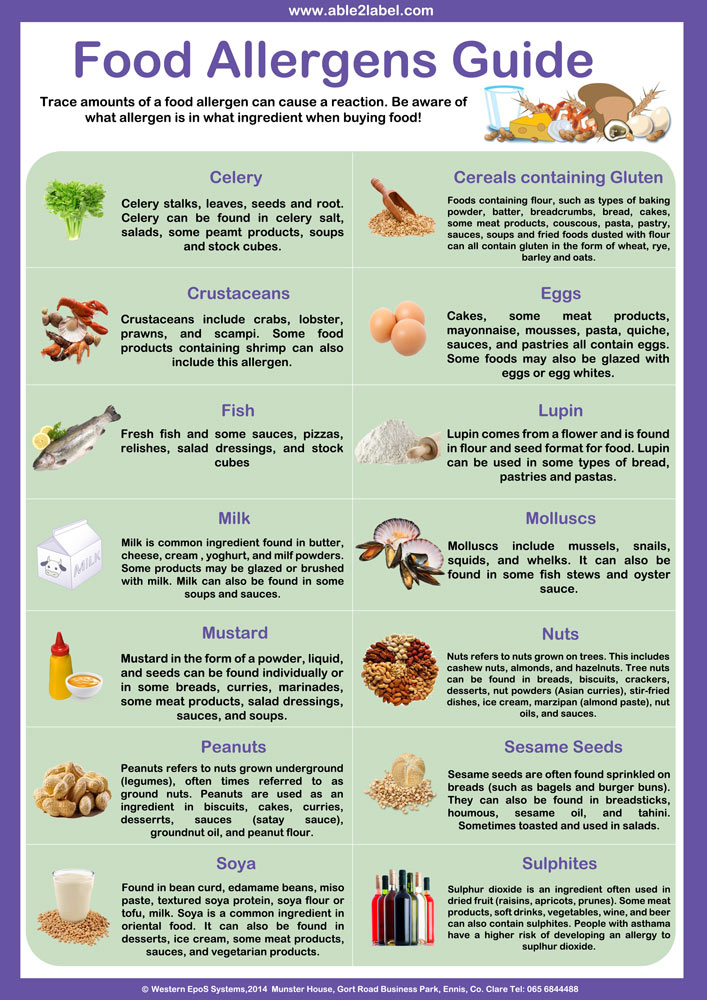
Allergens and Ingredients Labels - Able2Label Labelling Solutions | Ireland
How to Read a Food Label | Food Allergy Research & Education Starting Jan. 1, 2023, allergen labeling of sesame will be required under the Food Allergy Safety, Treatment, Education and Research (FASTER) Act of 2021. Ingredients and manufacturing processes can change without warning. Make a habit of carefully reading labels to ensure you avoid any potential allergens. "May Contain" Statements
Free Printable Food Labels for Home Organization
Major Food Allergen Labeling - TTB TTB has published an interim rule, effective July 26, 2006, allowing the voluntary labeling of major food allergens on the labels of wines, distilled spirits, and malt beverages. The regulatory provisions allowing the voluntary labeling of major food allergens are contained in T.D. TTB-53, published in the Federal Register on July 26, 2006.

nutrition regulations Archives - NiceLabel Blog
P1044 - Plain English Allergen Labelling - Food Standards The Australia New Zealand Food Standards Code (the Code) requires these to be declared on labels when they are present in food. On 25 February 2021 the Code was amended to introduce new requirements for the labelling of allergens in food. These requirements include that allergen information is to be declared:
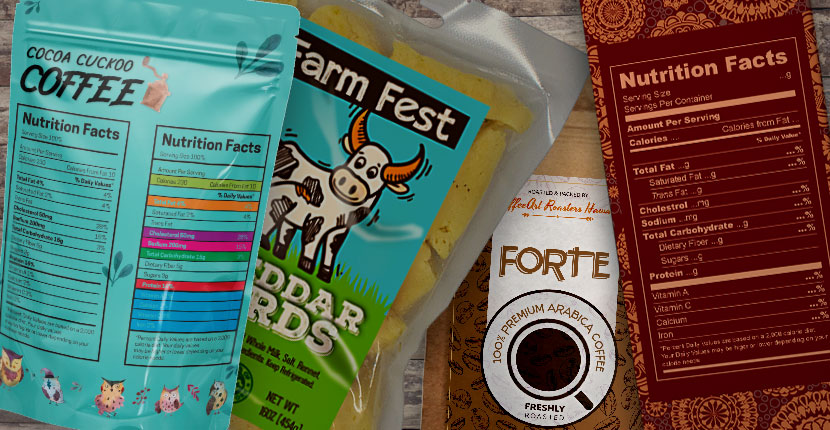
Required Information on Food Packaging Labels
Food Allergen Labeling Law Requirements and Exceptions Tree nuts (e.g., pecans and almonds) Peanuts Wheat, and Soybeans According to the FDA, these are the allergens that cause the most problems in the U.S. Foods that contain these allergens need to list them in the ingredients label on the package. In addition, manufacturers must use use the "common or usual name" of the allergen.

Food Allergens & Food Labels 13-Dec-2014 | GlutenfreeLady.nl
Allergen Labeling - TTBGov consistent with the provisions of the food allergen labeling and consumer protection act of 2004, falcpa, the interim rule defines a "major food allergen" to mean any of the following: milk, egg, fish (for example, bass, flounder, or cod), crustacean shellfish (for example, crab, lobster, or shrimp), tree nuts (for example, almonds, pecans, or …
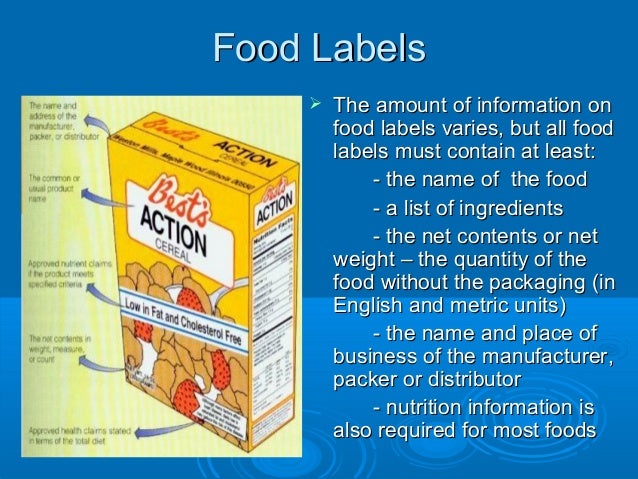
Dietary Recommendations, Food Guides, and Food Labels to Plan Menus
Food Labels: Read It Before You Eat It! - aaaai.org Ingredients of these most common eight allergens must be labeled with clearly recognized English names of the food source as listed above. The "contains" statement is "voluntary", but if used, must include ALL of the allergenic ingredients from the list of eight allergenic sources as described in item 14 of the 2006 guidance document.
Michigan Food Allergens Manager Training | StateFoodSafety.com
Food Labelling | Allergy UK | National Charity The FSA explains food labels. New legislation, which came into force on 1 October 2021, known as 'Natasha's Law' now also requires businesses to label all food that is pre-packed for direct sale (known as PPDS) with a full list of ingredients and the 14 allergens emphasised in bold.
Post a Comment for "40 allergens required on food labels"